Head
- Leads withHP, damage, %
- DecidesSurviving the opening hit
Guide
A robot needs one part in each of six slots. Read a card in three numbers — HP at the heart, damage at the crossed blades, defence at the shield — then compare parts inside the slot you are filling, not across slots.
Six parts from the same family switch on the +10% Perfect trait, so a matched set can beat one stronger part. That is the whole decision this page supports; the cards below are the ones we could actually read.
Six slots, six jobs. Each slot takes one part and each card leads with different numbers.
The cards we could read on screen. A blank means the card did not show that number.
A part only fits its own slot, so the slot decides what you are shopping for before the stats do. The cards at the top of this page line the six jobs up side by side.
Slot decides where a part can go. A perfect torso cannot fill a leg slot, so slot shopping comes before stat shopping.
Every number on this page was read off a card on screen, with the price the wall showed at that moment. Where a card did not print a number, the card above says so instead of guessing.
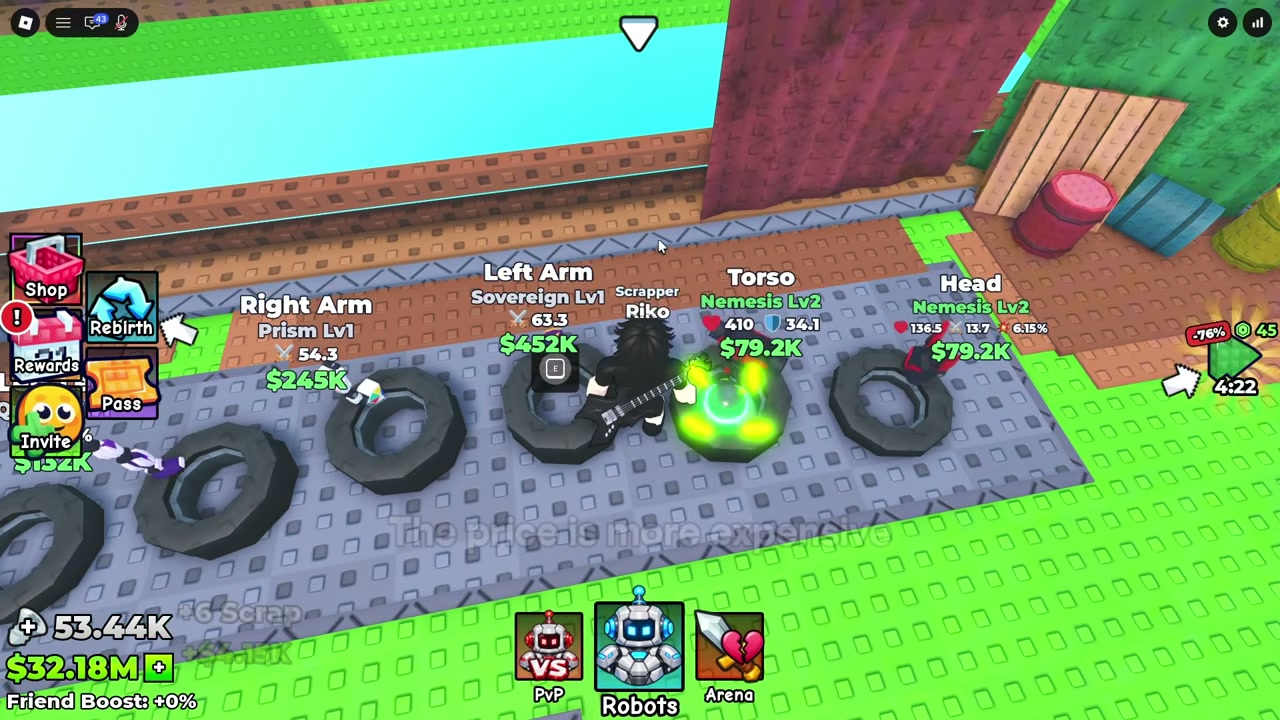
Two things to notice. Price does not track stat: the 22M arm is not four times the 452K arm on damage. And level does not track quality either — the Lv2 Nemesis head has less HP than the Lv1 Phoenix head, because the slot's job and the family differ.
Cards we only saw by name, without reading every number:
| Name | Where it appeared | What we could read |
|---|---|---|
| Omega | Part wall, 03:20 in the same recording | Name only; stats not read |
| Lunaris | Part wall, 03:20 in the same recording | Name only; stats not read |
| Dreadbot | Space floors, asked about in the community channel | Players treat it as a floor enemy; we did not see its floor |
| Cryovela | Asked about in the community channel | Name only; no price or slot confirmed |
| Atom | Codes reward (AT0M3) | Exclusive robot tied to a hidden code; stats not read |
A head card also carried two numbers at once in one frame — 13.7 damage and 6.15% — but the same slot showed a different layout two frames later, so we do not publish it as a complete row.
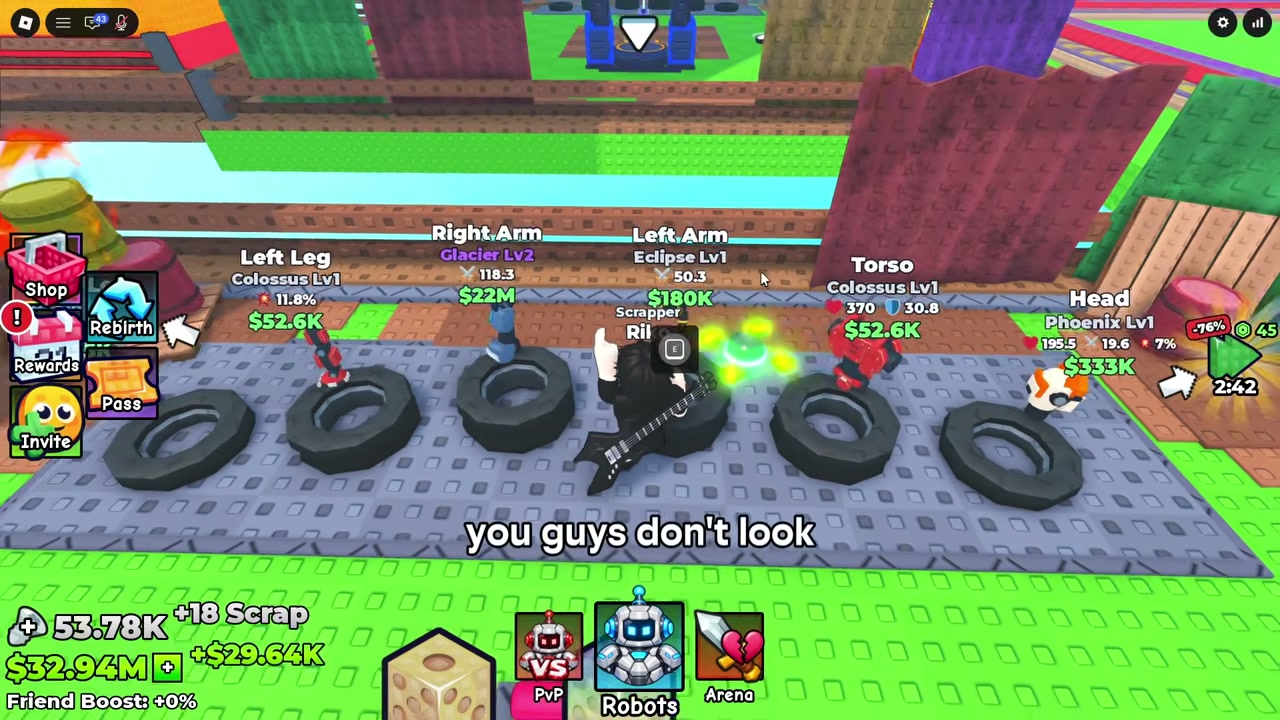
Same wall a moment later: higher level parts, much higher prices.
The Perfect trait gives +10% across a robot built from six parts of one family, and Update 1 made it apply to robots you already own. That changes the arithmetic: a matched set can be better than the best individual part you own in one slot.
Before you break a set, check the two things that actually change:
If the swap drops you from six matching parts to five, you are trading +10% on everything for one better card.
The Index lists the robot families that exist, and completing a whole Index tier pays a reward plus a permanent boost. Early parts is the setting that chooses which tiers the lever rolls, which is how you chase one family instead of accepting whatever appears.
Those two together are the honest answer to "how do I collect a set": pick the family, set Early parts to its tier, then roll.
Confirmed from the game itself: the six slots and the 0-of-6 counter, the three-number card layout, the part level printed on each card, and the eleven values in the tables above.
Not confirmed:
Where the game shows the real value is the card in front of you and the Index panel. Use those over anything in this table when they disagree, and note the date: these cards were read on 25 October 2026.